

If someone told you that the secret to better energy, stronger immunity, and healthier aging was hiding in your grocery cart, would you believe them? The truth is, one of the simplest nutrition strategies is also one of the most overlooked: eating the rainbow. Not candy-colored sweets, but naturally vibrant fruits and vegetables packed with compounds your body depends on. Color isn’t just pretty — it’s powerful. And when you understand what each hue brings to the table, you start to see your meals as more than food. They become a daily investment in your long-term health.
Red, Orange, and Yellow: The Colors of Protection
Red, orange, and yellow produce are often the first to catch your eye, and for good reason — they’re nutritional powerhouses. These warm-toned foods are rich in antioxidants like lycopene, beta-carotene, and vitamin C, which help protect cells from everyday stress. Think tomatoes, strawberries, bell peppers, oranges, and carrots. Their nutrients support immune function, eye health, and skin integrity, making them essential for anyone looking to age gracefully and stay resilient.
Red foods, in particular, are known for supporting heart health. Lycopene, found in tomatoes and watermelon, has been widely studied for its potential role in maintaining healthy cholesterol levels. Meanwhile, orange and yellow foods like sweet potatoes, mangoes, and squash deliver beta-carotene, which the body converts into vitamin A — a nutrient vital for vision and immune defense. When you fill your plate with these sunny shades, you’re giving your body the tools it needs to repair, defend, and thrive.

Greens: The Foundation of Everyday Wellness
Green foods are often considered the backbone of a nutritious diet, and it’s easy to see why. Leafy greens, cruciferous vegetables, and green fruits offer a wide range of vitamins, minerals, and phytonutrients that support nearly every system in the body. Spinach and kale provide iron and folate, essential for healthy blood and cellular function. Broccoli and Brussels sprouts contain compounds that support natural detoxification pathways. Even humble green apples and kiwis contribute fiber and vitamin C.
What makes green foods especially valuable is their versatility. They can be blended into smoothies, tossed into salads, sautéed as a side dish, or added to soups and grain bowls. Their mild flavors make them easy to incorporate into meals without overwhelming the palate. And because greens are typically low in calories but high in nutrients, they help create satisfying meals that support weight management and digestive health. When in doubt, adding something green is almost always a smart choice.
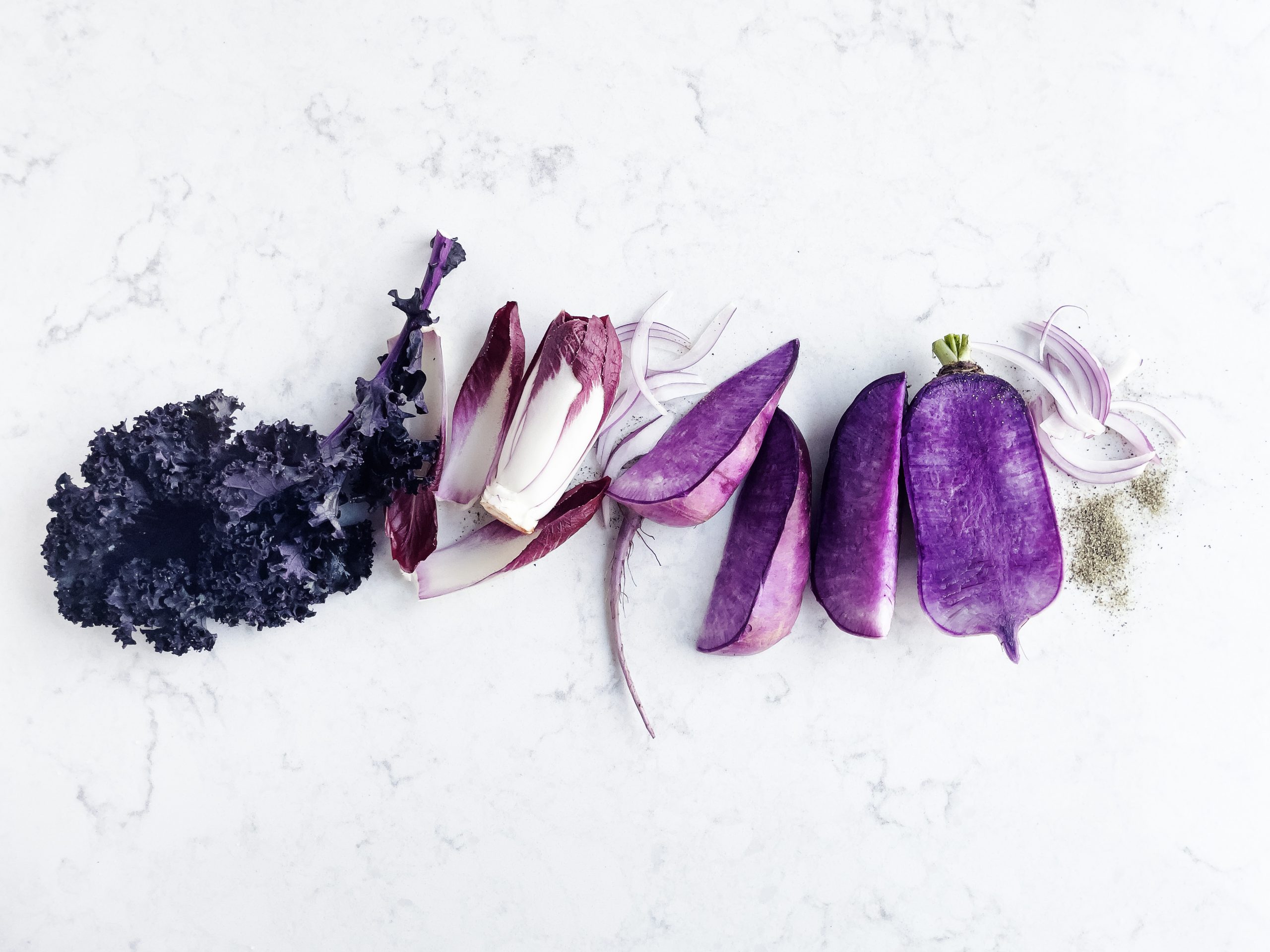
Blues, Purples, and Whites: The Underrated Nutrient Boosters
While red and green foods often steal the spotlight, the cooler end of the spectrum deserves just as much attention. Blue and purple foods — such as blueberries, blackberries, eggplant, and purple cabbage — are rich in anthocyanins, compounds linked to brain health and healthy aging. These pigments may help support memory, cognitive function, and overall cellular health. They also offer anti-inflammatory benefits, making them a smart addition for anyone focused on long-term wellness.
White and tan foods may not be as visually striking, but they play an important role too. Garlic, onions, mushrooms, cauliflower, and bananas provide nutrients that support immune function, heart health, and digestive balance. Many white vegetables contain allicin, a compound associated with cardiovascular benefits. Cauliflower, often overlooked, is packed with fiber and vitamin C and can easily take on the flavors of any dish. Together, these cooler and neutral tones round out the nutritional spectrum, ensuring your body receives a full range of protective compounds.
Eating the rainbow isn’t about perfection — it’s about intention. When you start viewing color as a guide, grocery shopping becomes simpler, meal planning becomes more creative, and your plate becomes a reflection of balanced nutrition. A colorful diet isn’t just visually appealing; it’s a practical, sustainable way to nourish your body every single day.