

Injuries, big and small, are a sad fact of life, and you never quite know what’s around the corner. First aid kits are a great way to stay prepared for anything life throws at you, whether that’s paper cuts or broken bones. You can buy pre-filled first aid kits at your local drug store, or you can put together your own. Whichever route you choose, it’s important to personalize your first aid kit to the specific needs of your family, home, and environment.
When it comes to preparing your first aid kit, the Red Cross offers a list of recommendations to include in the kit. These include:
- Absorbent compress dressings
- Adhesive band-aids
- Adhesive cloth tape
- Antibiotic ointment
- Antiseptic wipes
- Aspirin
- Emergency blanket
- CPR breathing barrier, also known as a resuscitation mask or face shield
- Instant/breakable ice packs
- Nonlatex gloves
- Hydrocortisone ointment
- Gauze roll bandage
- Sterile gauze pads
- Thermometer (non-glass and non-mercury)
- Triangular bandages
- Tweezers
- First aid instructions
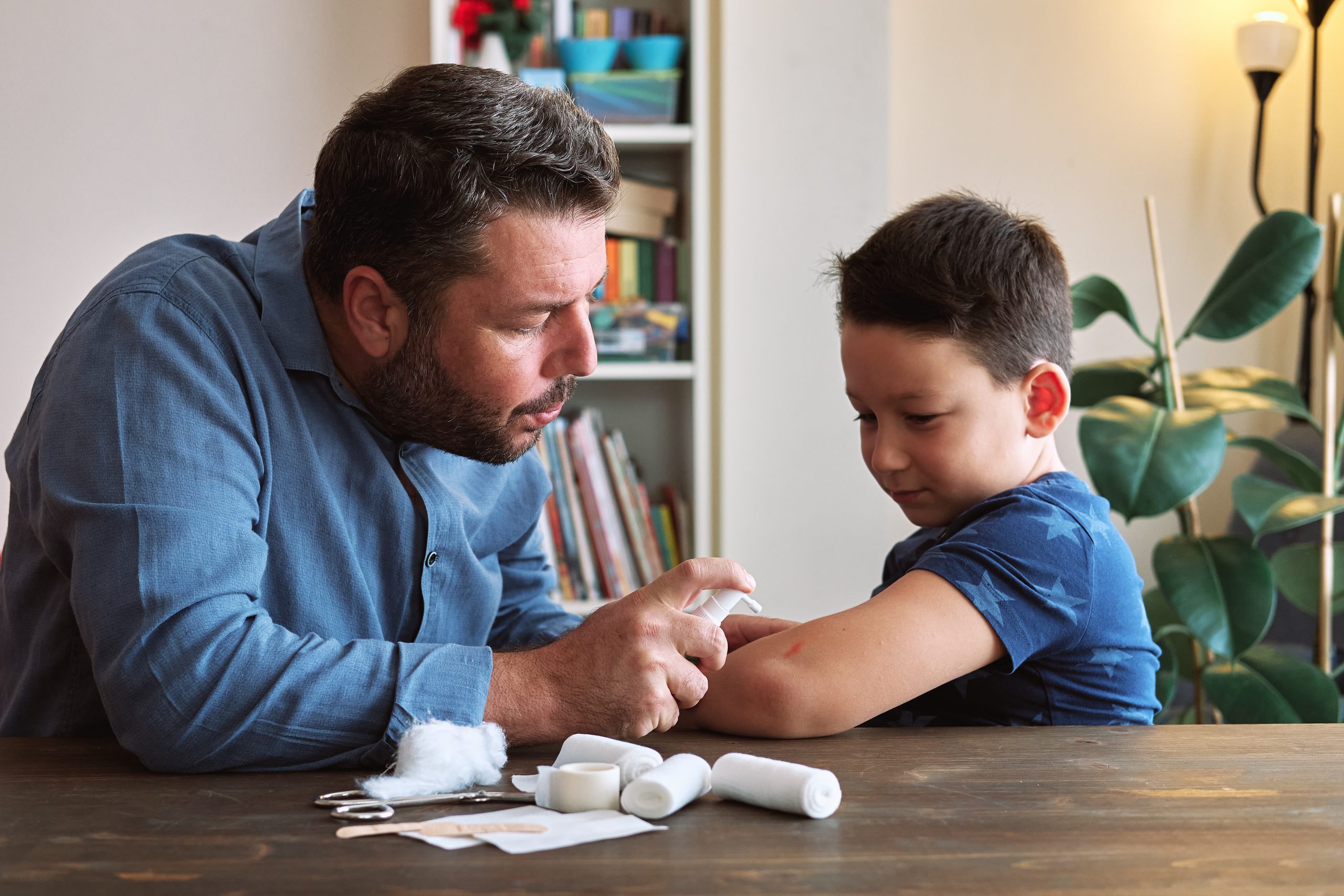
While these recommendations are a great place to start, there are a few other things to keep in mind when stocking your first aid kit.
- First aid recipients: Consider the needs of the people who will be using the first aid kit. Do you have young children? If so, it may be a good idea to include extra band-aids for scrapes or cuts. Does someone in your family use an EpiPen? Stock your first aid kit with an extra one, just in case.
- Environmental issues: Pre-made first aid kits may not be personalized to your specific location. Are poison ivy or stinging nettles common to your area? You may want to include in your kit ointments for rashes that could be caused by your local flora. Supplies for dealing with mosquito, jellyfish, or scorpion bites are another helpful addition. You may also want to include allergy medication for seasonal allergies, or for dealing with allergic reactions.
- Administering first aid: Do you know how each of the items in your first aid kit are used? Stockpiles of gauze and bandages won’t help much in an emergency if you don’t know what to do with them. Here are some important first aid tips:
- How to stop bleeding: Place a sterile gauze pad on the wound and apply pressure to staunch the bleeding. If possible, elevate it above the heart. If the blood seeps through the pad, do not remove it. Instead, apply another gauze pad and continue applying pressure.
- The Heimlich Maneuver: Used for assisting someone who is choking, the Heimlich maneuver can free a blockage from an affected person’s throat. Stand behind the person and lean them slightly forward. Then, wrap your arms around their waist. Clench one first and place it between the person’s belly button and rib cage. Place your free hand around the fist and bring sharply backward and upward, under the person’s rib cage in five thrusts. Repeat until the object is coughed up.
- Treating burns: Hold the burn under cool (not cold) running water for several minutes. If it’s a minor burn, apply ointment before wrapping the burn in gauze. Do not place ice on the burn. A first-degree burn only affects the outer layer of skin and is considered a minor burn. Burns that affect two layers of skin, or one that causes white or blackened skin are considered major burns. Major burns require medical attention.
- Dealing with sprains and broken bones: Keep the limb still and elevate it. Place an ice pack on the injury, with a barrier between the ice pack and the skin. If necessary, use anti-inflammatory drugs like Advil or Tylenol. Seek medical attention as soon as possible.
In an emergency, it could be difficult to remember the exact steps for administering first aid. It may be helpful to include instruction sheets or notes in your first aid kit, so that you’re prepared for anything, even if your mind goes blank.
Make sure to keep your first aid kit in an easily accessible area. Every six months, check your first aid kit to see if anything has expired and needs replacing. A good way to remember to do this is checking your kit whenever you change your clocks for daylight savings. You never know when you may need a first aid kit, so it’s important to always keep it up to date.
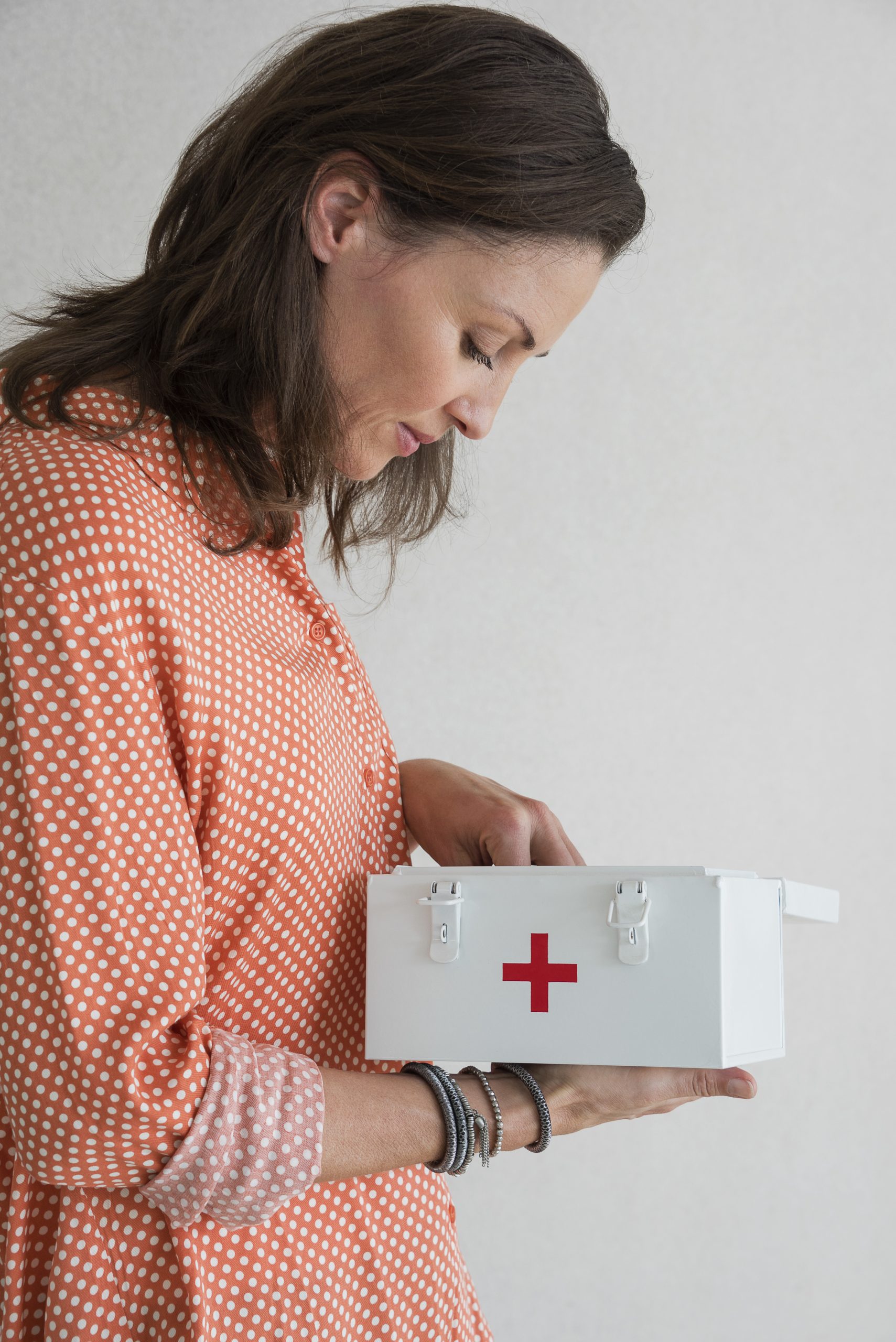
In emergencies, every second matters. The application of first aid
can significantly reduce the severity of a person’s injuries.